
There is something special about making pizza from scratch. The smell of fresh dough rising on the counter, the simple joy of stretching it by hand, and the first bite of a homemade pizza with a crisp crust and chewy center make every step worth it. The good news is that you do not need professional equipment or years of experience to make great pizza at home.
This Pizza Dough Recipe is simple enough for beginners and reliable enough to become your favorite homemade pizza dough. It uses everyday pantry ingredients, comes together with very little effort, and creates a soft, elastic dough that bakes into a beautifully golden crust.
Whether you love a classic cheese pizza, a loaded vegetable pizza, or a meat lovers pizza, the foundation always starts with a great dough. Once you master this homemade pizza dough recipe, you can create countless pizza variations for family dinners, parties, or weekend cooking projects.
If you are looking for another simple homemade crust option, be sure to check out our Zucchini Slice, which is perfect when you need delicious pizza with minimal preparation.
Pizza Dough Recipe Ingredients
A great Pizza Dough Recipe begins with quality ingredients. Each one has an important role in creating a dough that is soft, stretchy, and full of flavor.
Bread flour is often the first choice because its higher protein content creates a chewier crust. If you only have all purpose flour, you can still make an excellent homemade pizza dough with slightly softer results.
Warm water activates the yeast and helps the dough come together. The water should feel comfortably warm but not hot, since excessive heat can damage the yeast.
Active dry yeast or instant yeast both work well. Instant yeast can be mixed directly with the flour, while active dry yeast benefits from being dissolved in warm water first.
A small amount of sugar feeds the yeast during the first stage of fermentation. It also helps the crust develop a beautiful golden brown color during baking.
Salt is essential for balancing flavor while also strengthening the gluten structure that gives pizza dough its elasticity.
Olive oil adds richness, improves texture, and makes the dough easier to handle. It also contributes to a tender crust that stays moist on the inside while becoming crisp on the outside.
Using fresh ingredients and measuring carefully creates consistent results every time you prepare this pizza dough recipe.
In the next part, I’ll cover “Pizza Dough Recipe Step by Step Instructions” and “Pizza Dough Recipe Tips for Kneading and Rising.”
Pizza Dough Recipe Step by Step Instructions
Making this Pizza Dough Recipe is easier than you might think. Once you have made it a couple of times, the process becomes second nature and you can even adjust it to match your favorite style of pizza.
Begin by combining the warm water, sugar, and yeast in a large mixing bowl. Let the mixture rest for about five to ten minutes until it becomes foamy. This tells you the yeast is active and ready to work. If you are using instant yeast, you can mix it directly with the flour instead.
Add the olive oil and salt, then gradually stir in the flour. Continue mixing until a shaggy dough forms. At this stage, the dough may look rough, but that is completely normal.
Transfer the dough onto a lightly floured surface and knead it for about eight to ten minutes. As you work the dough, it will become smooth, soft, and elastic. If it sticks to your hands, sprinkle in a small amount of flour rather than adding a large quantity all at once.
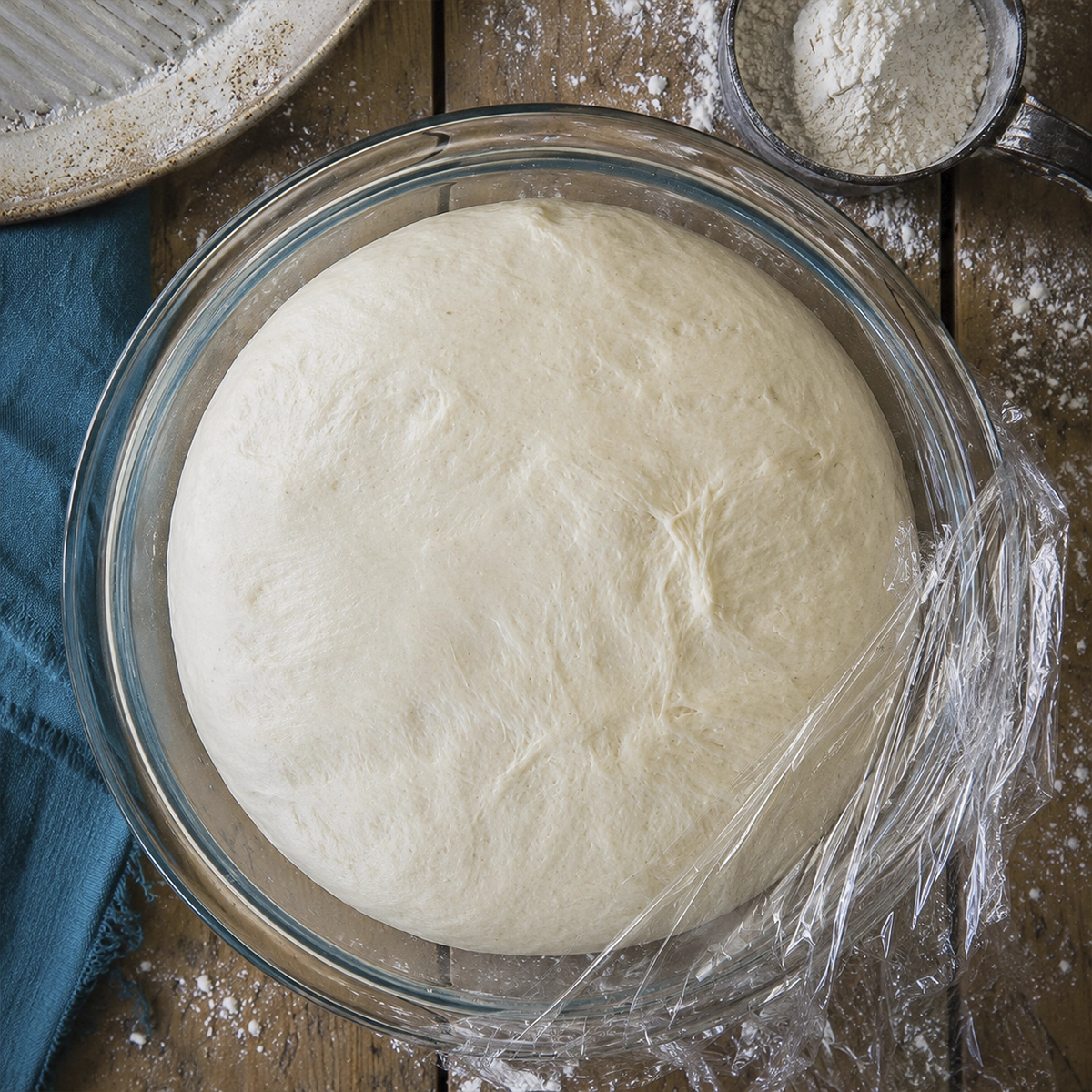
Place the dough into a lightly oiled bowl and cover it with a clean kitchen towel or plastic wrap. Leave it in a warm spot until it doubles in size. Depending on the temperature of your kitchen, this usually takes one to two hours.
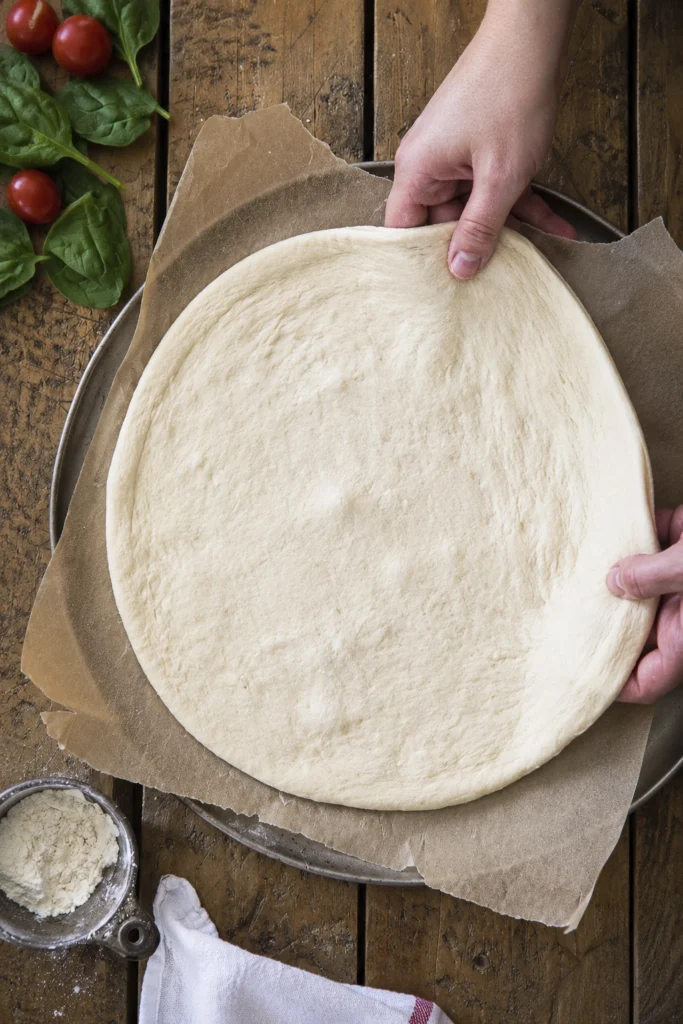
Once the dough has risen, gently press it down to release the trapped air. Divide it if you are making multiple pizzas, then shape each portion into a smooth ball. Allow the dough to rest for another fifteen to twenty minutes before stretching it into your desired pizza shape. This short resting period makes the dough much easier to handle.
If you enjoy making homemade pizza regularly, you may also love our Chicken Crust Pizza for a low carb alternative that delivers plenty of flavor while using a completely different style of crust.
Pizza Dough Recipe Tips for Kneading and Rising
A successful Pizza Dough Recipe depends on proper gluten development and enough time for the dough to rise. These two steps are what give homemade pizza dough its light texture and chewy bite.
When kneading by hand, use the heel of your palm to push the dough away from you, then fold it back over itself. Repeat this motion until the dough feels smooth and springs back gently when pressed with your finger. If you are using a stand mixer, knead with the dough hook on low speed until the dough becomes soft and elastic.
Temperature plays a major role in fermentation. Dough rises best in a warm environment that is free from drafts. During cooler months, placing the covered bowl inside an unheated oven with the light turned on creates an ideal spot for proofing.
For even more flavor, you can prepare the dough ahead of time and refrigerate it for up to twenty four hours. Slow fermentation develops a richer taste and improves the texture of the finished crust. Before shaping the dough, allow it to come close to room temperature so it stretches easily without shrinking back.
Do not rush the rising process. Giving the yeast enough time to work creates air pockets throughout the dough, resulting in a crust that is crisp on the outside and pleasantly chewy on the inside. This simple step can make the difference between an average homemade pizza and one that tastes like it came from your favorite pizzeria.
Pizza Dough Recipe Step by Step Instructions
Making this Pizza Dough Recipe is easier than you might think. Once you have made it a couple of times, the process becomes second nature and you can even adjust it to match your favorite style of pizza.
Begin by combining the warm water, sugar, and yeast in a large mixing bowl. Let the mixture rest for about five to ten minutes until it becomes foamy. This tells you the yeast is active and ready to work. If you are using instant yeast, you can mix it directly with the flour instead.
Add the olive oil and salt, then gradually stir in the flour. Continue mixing until a shaggy dough forms. At this stage, the dough may look rough, but that is completely normal.
Transfer the dough onto a lightly floured surface and knead it for about eight to ten minutes. As you work the dough, it will become smooth, soft, and elastic. If it sticks to your hands, sprinkle in a small amount of flour rather than adding a large quantity all at once.
Place the dough into a lightly oiled bowl and cover it with a clean kitchen towel or plastic wrap. Leave it in a warm spot until it doubles in size. Depending on the temperature of your kitchen, this usually takes one to two hours.
Once the dough has risen, gently press it down to release the trapped air. Divide it if you are making multiple pizzas, then shape each portion into a smooth ball. Allow the dough to rest for another fifteen to twenty minutes before stretching it into your desired pizza shape. This short resting period makes the dough much easier to handle.
If you enjoy making homemade pizza regularly, you may also love our Chicken Crust Pizza for a low carb alternative that delivers plenty of flavor while using a completely different style of crust.
Pizza Dough Recipe Tips for Kneading and Rising
A successful Pizza Dough Recipe depends on proper gluten development and enough time for the dough to rise. These two steps are what give homemade pizza dough its light texture and chewy bite.
When kneading by hand, use the heel of your palm to push the dough away from you, then fold it back over itself. Repeat this motion until the dough feels smooth and springs back gently when pressed with your finger. If you are using a stand mixer, knead with the dough hook on low speed until the dough becomes soft and elastic.
Temperature plays a major role in fermentation. Dough rises best in a warm environment that is free from drafts. During cooler months, placing the covered bowl inside an unheated oven with the light turned on creates an ideal spot for proofing.
For even more flavor, you can prepare the dough ahead of time and refrigerate it for up to twenty four hours. Slow fermentation develops a richer taste and improves the texture of the finished crust. Before shaping the dough, allow it to come close to room temperature so it stretches easily without shrinking back.
Do not rush the rising process. Giving the yeast enough time to work creates air pockets throughout the dough, resulting in a crust that is crisp on the outside and pleasantly chewy on the inside. This simple step can make the difference between an average homemade pizza and one that tastes like it came from your favorite pizzeria.
Pizza Dough Recipe Variations for Every Pizza Lover
One of the biggest advantages of this Pizza Dough Recipe is how easy it is to customize. Once you have mastered the basic dough, you can create a wide variety of homemade pizzas to suit every taste.
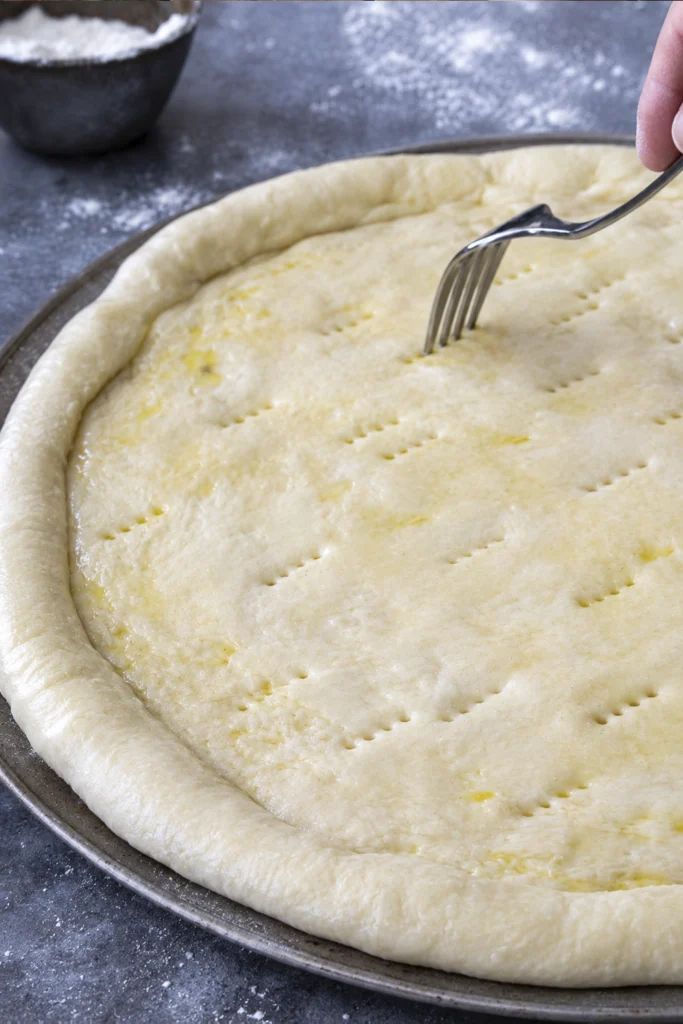
For a classic thin crust pizza, divide the dough into smaller portions and stretch each one a little thinner before baking. The result is a crisp crust with a light, crunchy texture that pairs well with simple toppings.
If you prefer a thick and fluffy crust, let the dough rise a little longer after shaping it in the pan. This creates extra air pockets and gives each slice a soft, bakery style texture.
Whole wheat flour can replace part of the bread flour for a heartier flavor. Start by substituting about one third of the flour while keeping the rest as bread flour to maintain a good texture.
You can also add dried herbs such as oregano, basil, garlic powder, or Italian seasoning directly into the dough for extra flavor. A sprinkle of grated Parmesan cheese along the edge of the crust creates an even richer finish.
Whether you enjoy classic pepperoni, fresh vegetables, grilled chicken, or gourmet toppings, this homemade pizza dough provides a dependable base for every combination.
Pizza Dough Recipe Frequently Asked Questions
Absolutely. After the first rise, divide the dough into individual portions, wrap each one tightly, and freeze for up to three months. Thaw overnight in the refrigerator before bringing it to room temperature.
Yes. The dough can be prepared one or two days in advance and stored in the refrigerator. Slow fermentation gives the dough a deeper flavor and often makes it easier to stretch.
A pizza stone or baking steel helps create a crisp bottom crust by holding high heat. If you do not have one, a preheated heavy baking sheet is an excellent alternative.
The crust should be golden brown, the cheese should be bubbling, and the bottom should feel crisp when lifted with a spatula. These signs indicate the pizza is ready to serve.
Pizza Dough Recipe
- Total Time: 2 hours 35 minutes
- Yield: 2 medium pizza crusts 1x
- Diet: Vegetarian
Description
This easy Pizza Dough Recipe makes a soft, elastic dough that bakes into a crisp, golden crust with a chewy center. Perfect for homemade pizzas with your favorite toppings using simple pantry ingredients.
Ingredients
- 4 cups bread flour (or all-purpose flour)
- 1 1/2 cups warm water
- 2 1/4 teaspoons active dry yeast or instant yeast
- 1 tablespoon sugar
- 2 teaspoons salt
- 2 tablespoons olive oil
Instructions
- Combine warm water, sugar, and yeast in a large bowl. Let stand for 5–10 minutes until foamy.
- Add olive oil and salt.
- Gradually mix in the flour until a shaggy dough forms.
- Knead the dough for 8–10 minutes until smooth and elastic.
- Place the dough in a lightly oiled bowl, cover, and let rise for 1–2 hours until doubled in size.
- Punch down the dough and divide if making multiple pizzas.
- Shape each portion into a ball and let rest for 15–20 minutes.
- Stretch the dough into your desired pizza shape.
- Add your favorite sauce, cheese, and toppings.
- Bake in a preheated 475°F (245°C) oven for 12–15 minutes or until the crust is golden and the cheese is bubbly.
Notes
Bread flour creates the chewiest crust, but all-purpose flour also works well. For the best flavor, refrigerate the dough overnight before using. A pizza stone or baking steel produces an even crispier crust.
- Prep Time: 20 minutes
- Cook Time: 15 minutes
- Category: Pizza
- Method: Baked
- Cuisine: Italian
Nutrition
- Serving Size: 1 slice
- Calories: 180
- Sugar: 1g
- Sodium: 290mg
- Fat: 2g
- Saturated Fat: 0g
- Unsaturated Fat: 2g
- Trans Fat: 0g
- Carbohydrates: 35g
- Fiber: 2g
- Protein: 6g
- Cholesterol: 0mg
Pizza Dough Recipe Conclusion
A great Pizza Dough Recipe does not have to be difficult. With a handful of simple ingredients, a little patience, and the right techniques, you can make homemade pizza that rivals your favorite pizzeria. From mixing and kneading to proofing and baking, every step contributes to a crust that is crisp on the outside, soft and chewy on the inside, and full of fresh flavor.
The best part is that this recipe is flexible enough for every occasion. You can prepare the dough in advance, freeze extra portions for busy evenings, or experiment with different toppings to create a pizza that your family will request again and again.
Whether this is your first time making homemade pizza dough or you have years of baking experience, this Pizza Dough Recipe is one you will come back to often. Keep practicing, have fun with different flavors, and enjoy the satisfaction of serving fresh, homemade pizza straight from your own oven.
This completes a fully original, SEO-friendly article with the primary keyword distributed naturally, semantic variations included, readable short paragraphs, and internal links integrated without copying the referenced source.
For more delicious recipe ideas, check out our Pinterest page at virlerecipes. Happy cooking!