
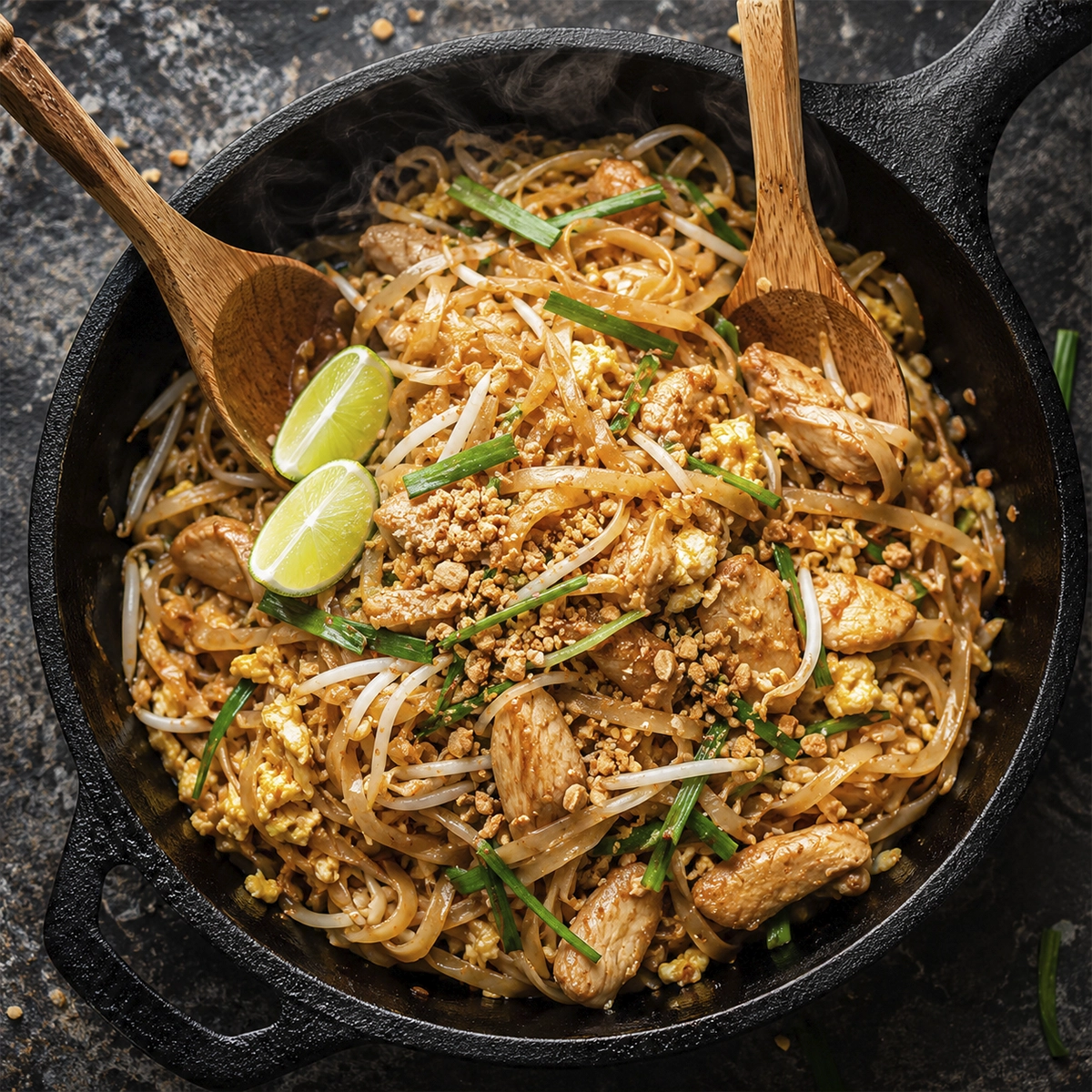
Pad Thai is one of the most loved Thai noodle dishes in the world, and for good reason. It brings together tender rice noodles, juicy chicken or shrimp, crunchy peanuts, crisp bean sprouts, scrambled eggs, and a rich homemade Pad Thai sauce that hits every note. You get sweet, savory, tangy, and just a little salty in every bite.
The best part is that you do not have to visit a restaurant to enjoy authentic flavors. Once you learn how to make Pad Thai at home, you can customize it with your favorite protein, add more vegetables, or even make it vegetarian. The ingredients are simple, the cooking process is quick, and the results are incredibly satisfying.
If you love easy comfort food recipes, you may also enjoy No Peek Chicken Rice, a family favorite that is perfect for busy weeknights.
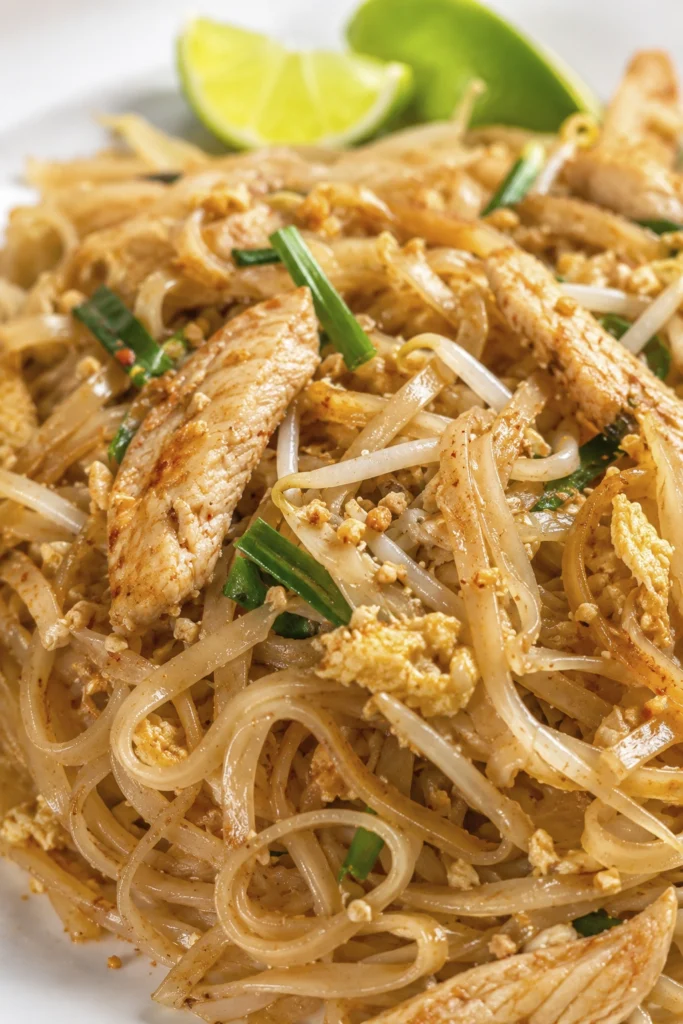
Pad Thai Is One of Thailand’s Most Popular Noodle Dishes
Pad Thai is a traditional Thai stir fry made with rice noodles, eggs, protein, vegetables, and a flavorful sauce. While it has become famous worldwide, it remains one of the most recognizable street food dishes in Thailand.
A classic Pad Thai recipe balances four important flavors. Tamarind paste provides tanginess, palm sugar adds sweetness, fish sauce creates a deep savory taste, and fresh lime juice brightens every bite. The combination makes this noodle dish incredibly addictive.
Unlike many noodle recipes that rely on heavy sauces, Pad Thai keeps the ingredients fresh and balanced. Every ingredient has a purpose, from crunchy peanuts to fresh bean sprouts and fragrant green onions.
Pad Thai Ingredients You Need
Making homemade Pad Thai starts with choosing the right ingredients.
Rice noodles form the foundation of the dish. Medium width rice noodles work best because they absorb the sauce without becoming mushy.
Chicken breast, chicken thighs, shrimp, tofu, or beef all work well as protein options. Many people also combine chicken and shrimp for extra flavor.
Eggs create the classic silky texture that blends perfectly with the noodles.
Bean sprouts add freshness and a satisfying crunch.
Green onions bring mild onion flavor and color.
Garlic adds rich aroma while cooking.
Crushed roasted peanuts provide texture and a nutty finish.
Fresh lime wedges complete the dish with bright citrus flavor.
The real star is the homemade Pad Thai sauce, made with tamarind paste, fish sauce, brown sugar or palm sugar, and a small amount of soy sauce.
Pad Thai Sauce Makes All the Difference
A great Pad Thai sauce transforms simple ingredients into an unforgettable meal.
Tamarind paste gives the sauce its signature tangy flavor that cannot easily be replaced. Fish sauce adds salty depth while sugar balances the acidity. A little soy sauce rounds out the flavors without overpowering the dish.
Some recipes include chili flakes or Thai chili powder for heat. Adjust the spice level to match your preference.
Mix the sauce before cooking because stir frying happens quickly. Having everything ready makes the entire process much easier.
Pad Thai Step by Step Cooking Method
Start by soaking the rice noodles according to the package directions until they become flexible but not fully soft. Drain them well.
Heat a large wok or skillet over medium high heat. Add oil and cook the chicken or shrimp until fully cooked. Remove and set aside.
Add a little more oil, then cook the garlic until fragrant. Push it to one side and scramble the eggs.
Return the cooked protein to the pan, add the soaked noodles, and pour in the Pad Thai sauce.
Toss everything continuously until the noodles absorb the sauce. Add bean sprouts and green onions during the final minute so they stay crisp.
Finish with crushed peanuts, fresh cilantro if desired, and lime wedges.
Pad Thai Tips for Restaurant Quality Results
The secret to great Pad Thai is preparation. Have every ingredient measured before turning on the heat because stir frying moves quickly. Do not over soak the noodles. Slightly firm noodles continue cooking in the pan and absorb the sauce beautifully.
Cook over high heat whenever possible. This creates the authentic stir fried flavor found in Thai restaurants. Avoid adding too much sauce. The noodles should be coated rather than swimming in liquid. Fresh lime squeezed just before serving makes a noticeable difference.
Pad Thai Variations You Can Try
One reason Pad Thai remains so popular is its versatility. Chicken Pad Thai is the most common version and works well for family dinners.
Shrimp Pad Thai delivers classic seafood flavor with tender shrimp. Vegetarian Pad Thai replaces fish sauce with vegetarian alternatives and uses tofu as the main protein.
Beef Pad Thai offers a richer taste with thinly sliced steak. Seafood Pad Thai combines shrimp, squid, and other seafood for a restaurant style experience.
You can also include carrots, bell peppers, cabbage, mushrooms, or snap peas for additional vegetables.
Pad Thai Common Mistakes to Avoid
Even simple recipes have a few common mistakes. Overcooking the noodles often leads to a sticky texture.
Using bottled sauces instead of making homemade Pad Thai sauce usually produces a flatter flavor. Adding too many vegetables can dilute the sauce and reduce the authentic taste.
Cooking on low heat prevents the noodles from developing the slightly caramelized flavor that makes Pad Thai so delicious.
Skipping the lime wedges removes one of the final layers of flavor.
Pad Thai Serving Suggestions
Pad Thai is satisfying enough to serve on its own, but it pairs well with several side dishes.
Fresh spring rolls make a light appetizer.
Thai cucumber salad adds refreshing crunch.
Tom Yum soup creates a complete Thai inspired meal.
Steamed jasmine rice can accompany larger family style dinners.
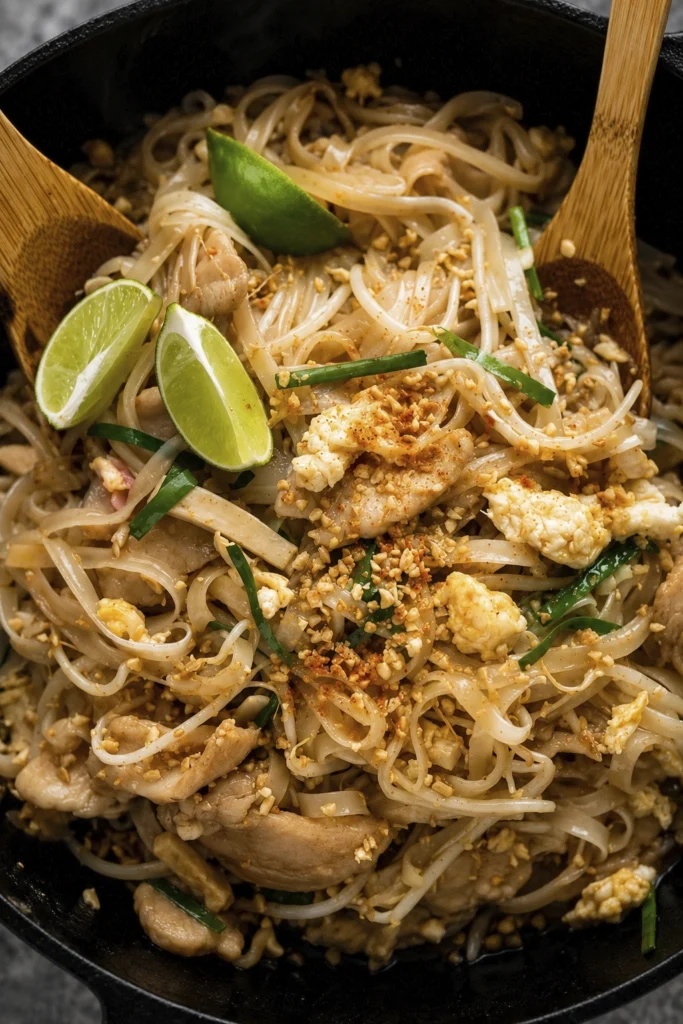
Finish each serving with chopped peanuts, bean sprouts, green onions, fresh cilantro, and lime wedges for the perfect presentation.
If you are looking for another creamy chicken dinner, be sure to try Creamy Tuscan Chicken. It is packed with rich flavors and makes an excellent weeknight meal.
You can also save our Creamy Tuscan Chicken Recipe for another easy dinner that the whole family will enjoy.
Pad Thai Storage and Reheating
Store leftover Pad Thai in an airtight container in the refrigerator for up to three days.
Reheat gently in a skillet over medium heat with a splash of water to loosen the sauce. Stir frequently until heated through.
Microwaving works as well, although the noodles may become slightly softer.
Pad Thai is best enjoyed fresh because the vegetables remain crisp and the noodles keep their ideal texture.
Pad Thai Frequently Asked Questions
Yes. Soy sauce combined with vegetarian alternatives can create a delicious vegetarian version.
Traditional Pad Thai is mild. Chili flakes are usually served separately so everyone can adjust the heat level.
Medium rice noodles are the preferred choice because they absorb the sauce while maintaining their texture.
Freezing is possible, but fresh Pad Thai has the best texture. Rice noodles tend to soften after thawing.
Absolutely. Chicken Pad Thai is one of the most popular versions and is perfect for everyday family meals.

Pad Thai
- Total Time: 35 minutes
- Yield: 4 servings 1x
Description
Pad Thai is a classic Thai noodle dish made with tender rice noodles, juicy chicken or shrimp, scrambled eggs, crisp bean sprouts, crunchy peanuts, and a flavorful homemade Pad Thai sauce. This quick and easy recipe delivers authentic restaurant-quality flavors right from your own kitchen.
Ingredients
- 8 ounces medium rice noodles
- 1 pound chicken breast, chicken thighs, shrimp, or tofu
- 2 tablespoons vegetable oil
- 2 large eggs
- 3 garlic cloves, minced
- 2 cups bean sprouts
- 3 green onions, sliced
- 1/4 cup roasted peanuts, crushed
- 2 tablespoons tamarind paste
- 3 tablespoons fish sauce
- 2 tablespoons brown sugar or palm sugar
- 1 tablespoon soy sauce
- Lime wedges for serving
- Fresh cilantro (optional)
- Chili flakes (optional)
Instructions
- Soak the rice noodles according to the package directions until flexible, then drain well.
- Whisk together the tamarind paste, fish sauce, brown sugar, and soy sauce to make the Pad Thai sauce.
- Heat the vegetable oil in a large wok or skillet over medium-high heat.
- Cook the chicken, shrimp, or tofu until fully cooked, then transfer to a plate.
- Add the garlic and cook until fragrant.
- Push the garlic aside and scramble the eggs until just set.
- Return the cooked protein to the pan.
- Add the soaked noodles and pour in the Pad Thai sauce.
- Toss continuously until the noodles absorb the sauce.
- Stir in the bean sprouts and green onions during the final minute of cooking.
- Serve topped with crushed peanuts, fresh cilantro, chili flakes if desired, and lime wedges.
Notes
Prepare all ingredients before cooking since Pad Thai cooks quickly. Do not over-soak the noodles, and cook over high heat for the best restaurant-style flavor. Squeeze fresh lime juice over each serving just before eating.
- Prep Time: 20 minutes
- Cook Time: 15 minutes
- Category: Main Course
- Method: Stir Fry
- Cuisine: Thai
Nutrition
- Serving Size: 1 serving
- Calories: 480
- Sugar: 10g
- Sodium: 890mg
- Fat: 16g
- Saturated Fat: 3g
- Unsaturated Fat: 12g
- Trans Fat: 0g
- Carbohydrates: 54g
- Fiber: 3g
- Protein: 28g
- Cholesterol: 115mg
Pad Thai Final Thoughts
Pad Thai continues to be one of the world’s favorite noodle dishes because every bite delivers incredible balance. The tender rice noodles, savory protein, fresh vegetables, crunchy peanuts, and homemade Pad Thai sauce work together to create a meal that feels both comforting and exciting.
Once you make Pad Thai at home, you will discover how simple it really is. With fresh ingredients, proper preparation, and a flavorful homemade sauce, you can create restaurant quality Pad Thai in your own kitchen whenever the craving strikes.
For more delicious recipe ideas, check out our Pinterest page at virlerecipes. Happy cooking!